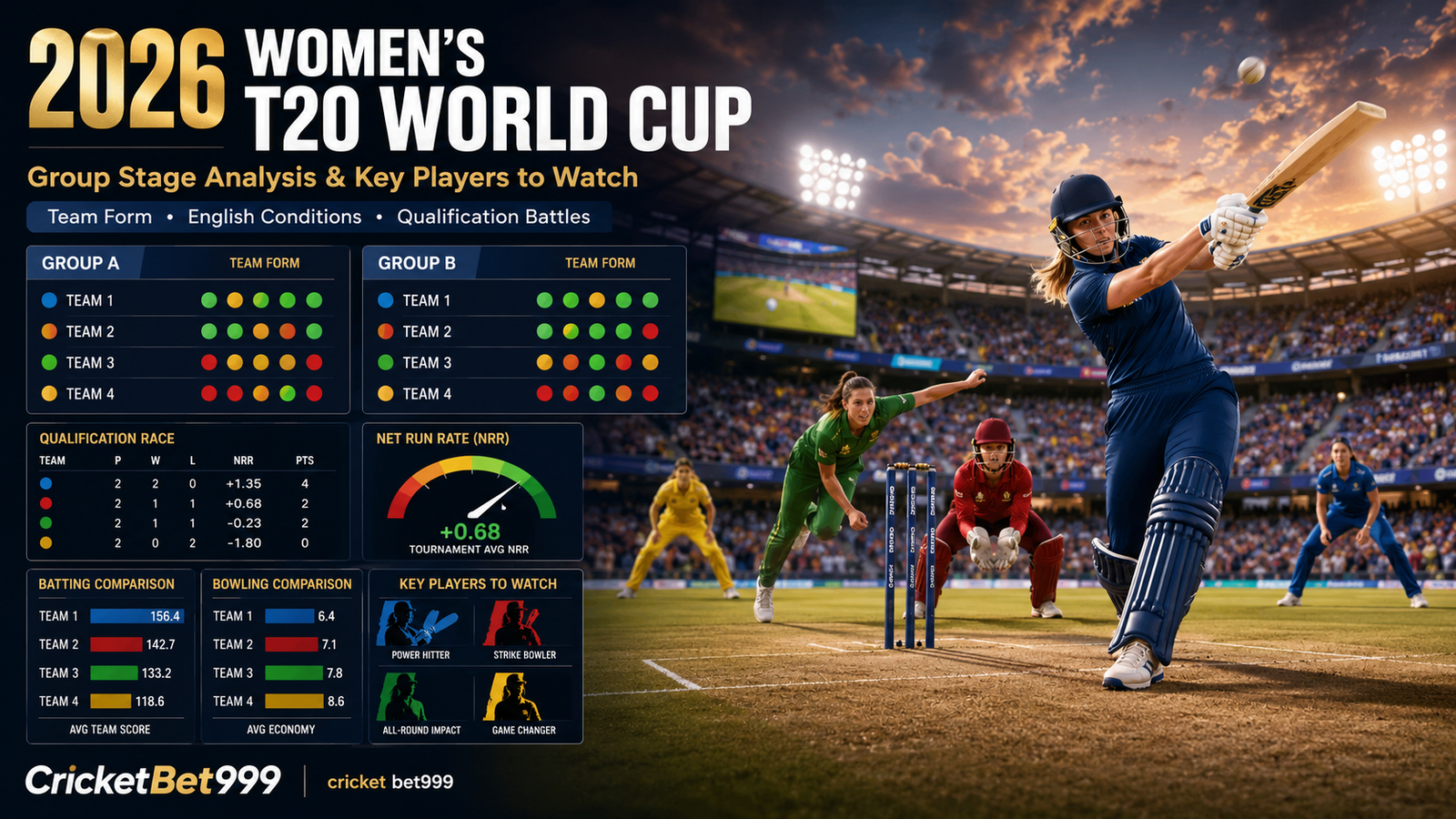
The 2026 Women’s T20 World Cup brought together 12 international teams across England and Wales from June 12 to July 5, 2026. The tournament delivered dominant group-stage campaigns, close qualification battles, breakthrough performances and several important lessons about T20 cricket.
Australia and England finished at the top of their respective groups. South Africa and West Indies also advanced to the semi-finals, while Australia eventually defeated England by seven wickets at Lord’s to win the title. The tournament showed how squad depth, English conditions, net run rate and pressure management can shape a short-format competition.
Quick Summary
- Australia and England completed unbeaten group-stage campaigns.
- South Africa qualified from Group A alongside Australia.
- West Indies progressed from Group B ahead of Sri Lanka on net run rate.
- India missed the semi-finals despite winning three matches.
- Australia completed the tournament unbeaten and won their seventh title.
Table of Contents
- 2026 Women’s T20 World Cup overview
- Tournament groups and format
- Group-stage analysis
- English playing conditions
- Leading tournament teams
- Key players to watch
- Important tactical battles
- Fantasy cricket insights
- Qualification factors
- Frequently asked questions
2026 Women’s T20 World Cup Overview
The competition featured a record 12 teams divided into two groups of six. Every side played the other five teams in its group once. The top two teams from each group advanced to the semi-finals.
The tournament included 33 matches across seven venues. The semi-finals were held at The Oval, while Lord’s hosted the final on July 5. England and Wales staged the tournament between June 12 and July 5.
Tournament Groups and Format
| Group | Participating Teams | Leading Contenders | Main Qualification Factor |
| Group A | Australia, South Africa, India, Bangladesh, Pakistan, Netherlands | Australia, South Africa, India | Results against direct rivals |
| Group B | England, West Indies, Sri Lanka, New Zealand, Scotland, Ireland | England, West Indies, Sri Lanka | Net run rate |
Only the top two sides from each six-team group reached the knockout stage. This format made every result important, especially matches between teams competing for the same qualification position.
Group-Stage Analysis
Group A Analysis
Australia controlled Group A and qualified without losing a match. Their experienced batting lineup, bowling variety and dependable all-rounders allowed them to respond to different match situations.
South Africa recovered after losing to Australia and secured the second qualification position. Their important victory over India became one of the defining results of the group.
India remained competitive but defeats against Australia and South Africa reduced their qualification chances. Bangladesh and Pakistan produced encouraging moments, while the Netherlands gained valuable experience during their first Women’s T20 World Cup appearance.
Group B Analysis
England won all five group matches and used their familiarity with home conditions effectively. Their batting depth and flexible bowling attack allowed them to control different phases of matches.
West Indies started with three victories before losing their final two group games. However, they still reached the semi-finals because their net run rate was better than Sri Lanka’s.
Sri Lanka finished third despite producing strong performances, including a victory over defending champions New Zealand. Scotland and Ireland also recorded important tournament moments, showing the growing depth of women’s international cricket.
How English Conditions Influenced the Tournament
English cricket grounds can produce changing conditions within the same match. Cloud cover and fresh surfaces may help fast bowlers find swing and seam movement during the powerplay.
However, drier pitches can also bring spinners and slower deliveries into the game. Batters need to judge bounce carefully before playing aggressive cross-batted shots.
Boundary sizes also differ between venues. Therefore, successful teams combine power-hitting with smart running, placement and strike rotation. Weather conditions can also influence team selection, bowling combinations and chasing strategies.
Leading Teams and Their Group-Stage Strengths
| Team | Main Strength | Possible Concern | Group-Stage Result |
| Australia | Exceptional squad depth | Occasional early wickets | First in Group A |
| England | Strong batting and home knowledge | Injury management | First in Group B |
| South Africa | Experienced all-rounders | Inconsistent starts | Second in Group A |
| West Indies | Powerful match-winning players | Uneven batting form | Second in Group B |
Australia and England entered the semi-finals unbeaten. South Africa recovered strongly from their opening defeat, while West Indies qualified despite losing their final two group matches.
Key Players to Watch
Leading Top-Order Batters
Danni Wyatt-Hodge finished as the tournament’s leading run-scorer with 302 runs. Her attacking approach gave England strong starts and reduced pressure on the middle order.
Beth Mooney scored 238 runs and played an important role in Australia’s successful campaign. She also made 64 in the final and received both the Player of the Match and Player of the Tournament awards.
Influential All-Rounders
Ellyse Perry contributed important runs and useful wickets throughout the competition. She scored an unbeaten 56 against India when Australia needed a controlled chase.
Marizanne Kapp remained central to South Africa’s balance. Her new-ball bowling created early pressure, while her unbeaten 81 against India played a major role in South Africa’s qualification.
Ash Gardner also provided power-hitting, off-spin and valuable middle-order stability for Australia.
Fast Bowlers and Spinners
Sree Charani finished as the tournament’s leading wicket-taker with 14 wickets in five matches. Her control and wicket-taking ability made her one of India’s most effective performers.
Sophie Molineux took 11 wickets and led Australia to seven victories in seven matches. Fatima Sana also impressed for Pakistan with 11 wickets and useful lower-order runs.
Emerging Players
Darcey Carter scored 208 runs for Scotland and showed composure against established bowling attacks. Orla Prendergast contributed with both bat and ball and helped Ireland record their first Women’s T20 World Cup victory.
These performances demonstrated that emerging teams now have players capable of influencing matches against higher-ranked opponents.
Important Group-Stage Battles
Opening Batters Against New-Ball Bowlers
The first six overs often decided the direction of a match. Teams that protected wickets while maintaining a useful scoring rate created stronger platforms.
Middle-Order Batters Against Spin
Spinners became important when pitches slowed down. Batters needed to rotate the strike instead of relying only on boundaries.
Finishers Against Death-Over Bowlers
Slower balls, yorkers and wide lines made the final overs difficult. Strong finishing required awareness, placement and controlled power.
Net Run Rate Pressure
West Indies qualifying ahead of Sri Lanka showed why teams must consider net run rate throughout the group stage. A comfortable victory or heavy defeat can influence qualification several matches later.
Fantasy Cricket Insights for Beginners
Always check the confirmed Playing XI before creating a fantasy cricket team. A selected player cannot earn points when left out of the final lineup.
Opening batters, genuine all-rounders and bowlers used in the powerplay or death overs usually receive more opportunities. However, reputation alone should not decide selection.
Captain and vice-captain choices should reflect role, form and expected match involvement. Pitch reports, weather conditions and recent performances can also help users make more informed selections.
Fantasy analysis cannot guarantee points or contest results. Treat it as an educational exercise based on cricket knowledge and available information.
Factors That Decided Group Qualification
| Factor | Why It Mattered |
| Net run rate | Separated teams finishing on equal points |
| Head-to-head results | Influenced direct qualification battles |
| Powerplay performance | Created early momentum |
| Death-over execution | Controlled final totals and chases |
| Fielding quality | Saved runs and produced wickets |
| Squad depth | Helped teams manage injuries and poor form |
| Weather conditions | Changed playing combinations and tactics |
| Injury management | Protected important players |
How CricketBet999 Helps Readers Follow the Tournament
CricketBet999, also searched as cricket bet999, provides educational content related to match previews, team analysis, pitch reports, player insights and fantasy cricket learning.
Such information can help beginners understand cricket terminology, playing conditions, team balance and tournament formats. However, match analysis should never be presented as a guaranteed prediction or a promise of financial returns.
Responsible Gaming and Prediction Awareness
Cricket remains unpredictable. One over, an injury, changing weather or an unexpected performance can alter the result.
Adults should follow local laws, set clear spending limits and never treat financial gaming as a source of income. Match previews and predictions should remain educational opinions rather than guaranteed outcomes.
Expert Group-Stage Outlook
The completed group stage highlighted Australia’s exceptional depth and England’s ability to use home conditions. South Africa showed resilience after an early defeat, while West Indies survived a close qualification battle.
India and Sri Lanka were among the strongest sides to miss the semi-finals. Their exits showed that victories alone may not be enough. Direct results, net run rate and performances against leading opponents can be equally important.
Frequently Asked Questions
When and where was the 2026 Women’s T20 World Cup played?
The tournament was played across England and Wales from June 12 to July 5, 2026. Seven venues hosted 33 matches. The semi-finals took place at The Oval, while Lord’s hosted the final between Australia and England.
How did the Women’s T20 World Cup group stage work?
The 12 teams were divided into two groups of six. Each side played five round-robin matches. The top two teams from each group progressed to the semi-finals, with net run rate helping separate teams that finished level on points.
Which teams qualified for the semi-finals?
Australia and South Africa qualified from Group A. England and West Indies progressed from Group B. Australia faced West Indies, while England played South Africa in the two semi-finals at The Oval.
Who won the 2026 Women’s T20 World Cup?
Australia won the tournament after defeating England by seven wickets in the final at Lord’s. Beth Mooney scored 64 during the successful chase and was named Player of the Match and Player of the Tournament.
Who were the key players in the tournament?
Danni Wyatt-Hodge led the run-scoring charts, while Beth Mooney received the Player of the Tournament award. Sree Charani took the most wickets. Ellyse Perry, Marizanne Kapp, Sophie Molineux and Ash Gardner also produced important all-round performances.
How did English conditions affect the matches?
Cloud cover and fresh pitches sometimes supported swing and seam bowling. Drier surfaces brought spinners and slower balls into play. Teams also had to adjust to different boundary sizes, weather changes and varied conditions across the seven tournament venues.
Conclusion
The 2026 Women’s T20 World Cup delivered strong performances, close qualification battles and valuable tactical lessons. Australia and England dominated the group stage, while South Africa and West Indies earned semi-final places through important results and effective pressure management.
English conditions rewarded adaptable batting, disciplined new-ball bowling and intelligent use of spin. Players such as Danni Wyatt-Hodge, Beth Mooney, Sree Charani and Marizanne Kapp played major roles throughout the tournament.
Readers using cricket bet999 should compare analysis with verified ICC and official cricket-board updates. Treat match predictions as informed opinions and always make responsible decisions.